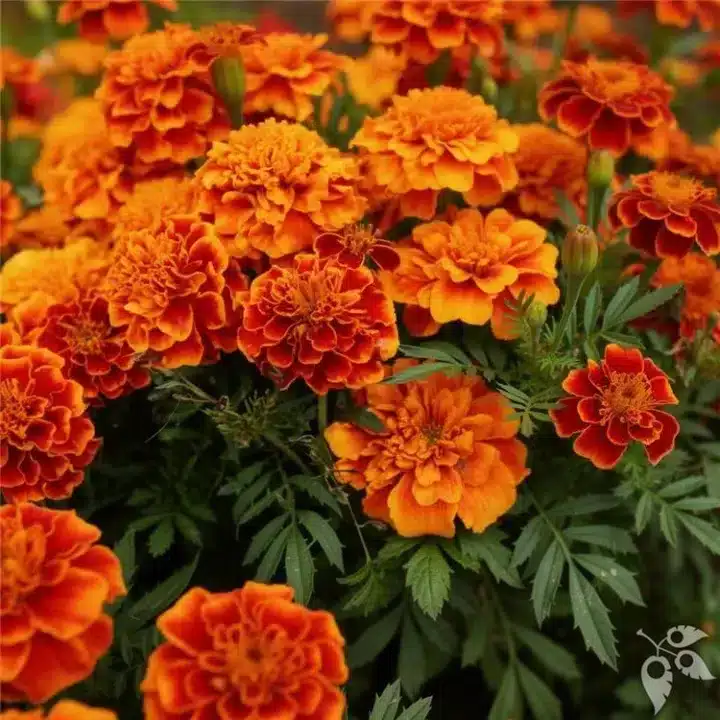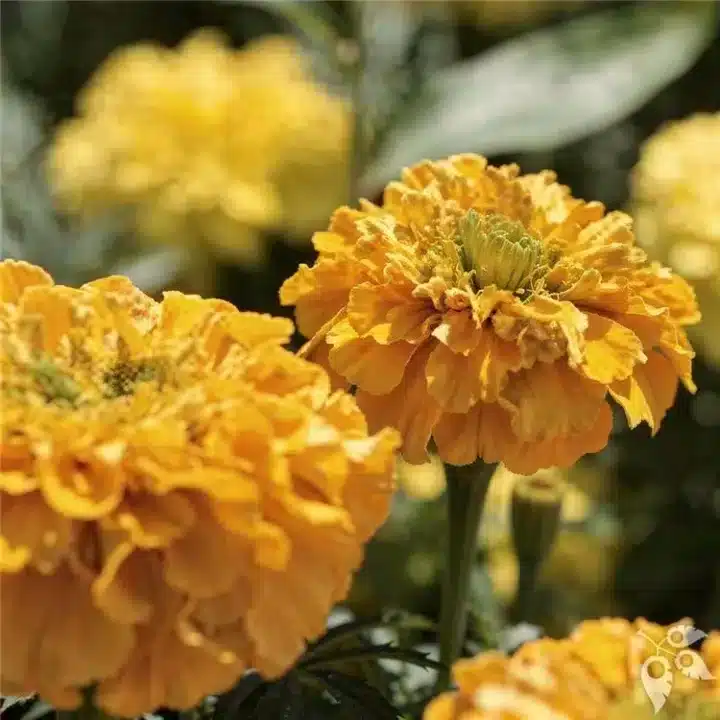
About Marigold
Marigold (Tagetes spp.) grows 6 to 36 inches tall and is hardy in USDA zones 2 to 11. It grows best in full sun to part sun with medium water.
Marigolds (Tagetes) is a low maintenance genus in the sunflower or aster family that includes 49 species of flowering, herbaceous plants. Marigolds are native to Central and South America but have been introduced throughout the world. They have a clumping rounded growth habit. Marigolds have a wide USDA plant hardiness zone of 2a – 11b. Marigolds should be planted in full sun in soils with good drainage. Depending upon the environment Marigolds may be annuals or perennials. Marigolds vary widely in the ultimate size ranging from 4 inches high to up to 7 feet tall depending upon the species. The green leaves are compound or simple arranged alternately or opposite depending on the variety. Marigolds feature gold/yellow, orange, and red/burgundy flowers which are often small (less than 1 inch) which appear in the summer and fall. A black fruit develops in the late fall. Marigold plants express a strong aroma when crushed. Marigold flowers are bitter with a spicy herbal flavor. The entire Marigold plant is mildly poisonous however in limited amounts tea can be made from the leaves. Marigolds have many applications in the landscape in containers, along walkways, and in cutting gardens and drought-tolerant gardens. The name Tagetes is derived from the name for an Etruscan seer reportedly born from the earth which refers to the ease with which plants of this genus reproduce from seeds from the previous year or from the stumps which regrow from the previous year’s plants.
When to Plant Marigolds
Sow marigold seeds or set out transplants after the last spring frost, once the soil has warmed. Seeds can also be started indoors 6 to 8 weeks earlier.
How to Plant Marigolds
Marigolds purchased as plants should be planted in the full sun into soils with good drainage and a neutral pH. Approximately 1 foot should be allowed for each plant. Marigolds will tolerate clay, loam, or sandy soils which have added organic material. Marigolds are easily grown from seed. The seeds should be covered with 1/2 inch of soil in a prepared bed of prepared to promote drainage. The seeds must be kept moist until germination. Propagation is seeds gathered from mature plants in the late fall.
Marigold Care
Marigolds should be provided with consistent moisture. The larger (taller) varieties of Marigolds will require staking or plant support rings.
Fertilizing Marigolds
Marigold plants should be fertilized using a balanced (10-10-10) slow-release granular fertilizer in the late spring and midsummer. Fertilization of seeds at the time of planting is optional.
Pruning Marigolds
When marigolds are planted by seed it may be necessary to remove some of the seedlings to allow for proper growth and flower development. Damaged plants should be pruned as needed. Spent flowers should be removed to promote reblooming.
Marigold Pests and Diseases
Marigolds may be infected with Sclerotina sclerotiorum, a fungal pathogen. Marigolds are generally resistant to most pests. Spider mites, slugs, leafminers, aphids, and thrips may attach Marigolds. Treatment is often successful with a neem oil spray.
Are Marigolds Toxic to Cats and Dogs?
The PlantTAGG profile lists marigolds (Tagetes) as not pet-friendly. Their sap can irritate a pet’s skin and mouth and may upset the stomach if eaten. If you think a pet has eaten a toxic plant, call your veterinarian or the ASPCA Animal Poison Control Center at (888) 426-4435.
Marigold FAQs
Do marigolds keep pests away?
French marigolds are known for suppressing root-knot nematodes in the soil, and many gardeners plant them near vegetables. Their effect on other insects is less certain.
Do marigolds need full sun?
Yes. Marigolds bloom best with at least 6 hours of direct sun and tolerate heat and dry soil once established.
Should I deadhead marigolds?
Yes. Pinching off faded flowers keeps marigolds blooming from spring until frost.
Search thousands of plants for your zone with PlantTAGG Plant Search