About Arborvitae
Arborvitae (Thuja occidentalis) grows 20 to 50 feet tall and is hardy in USDA zones 2 to 7. It grows best in full sun to part sun with medium water.
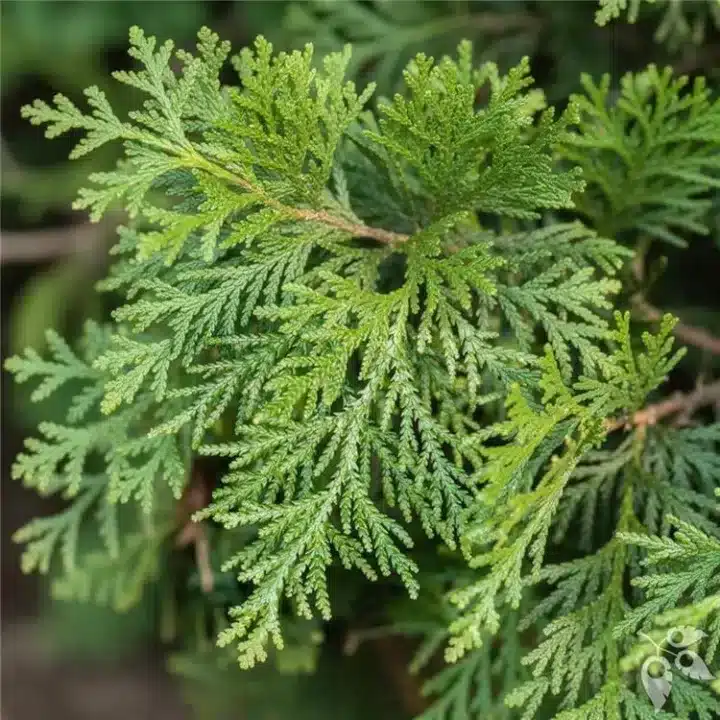
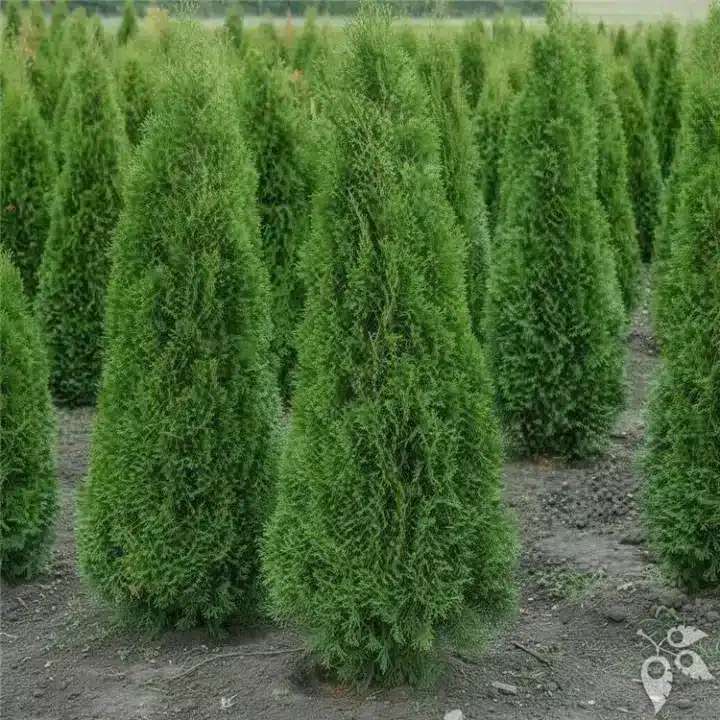
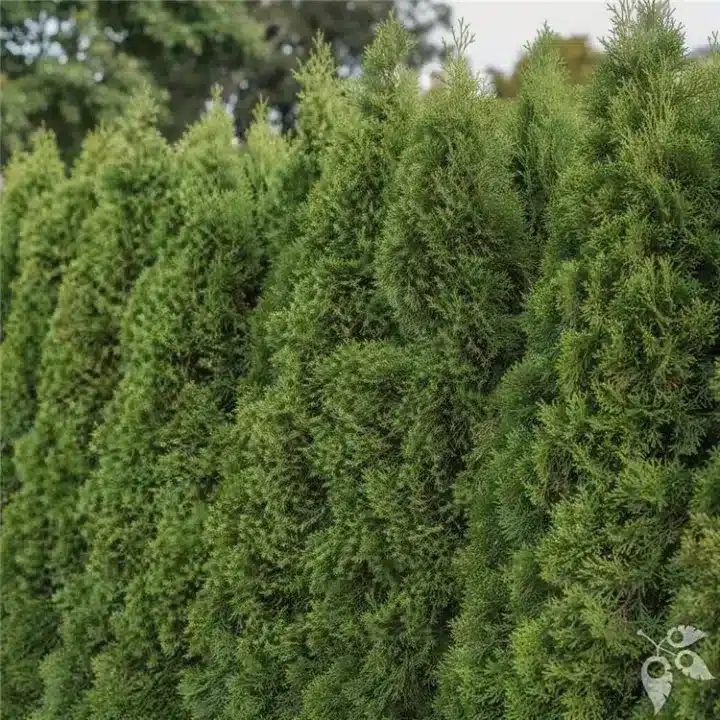
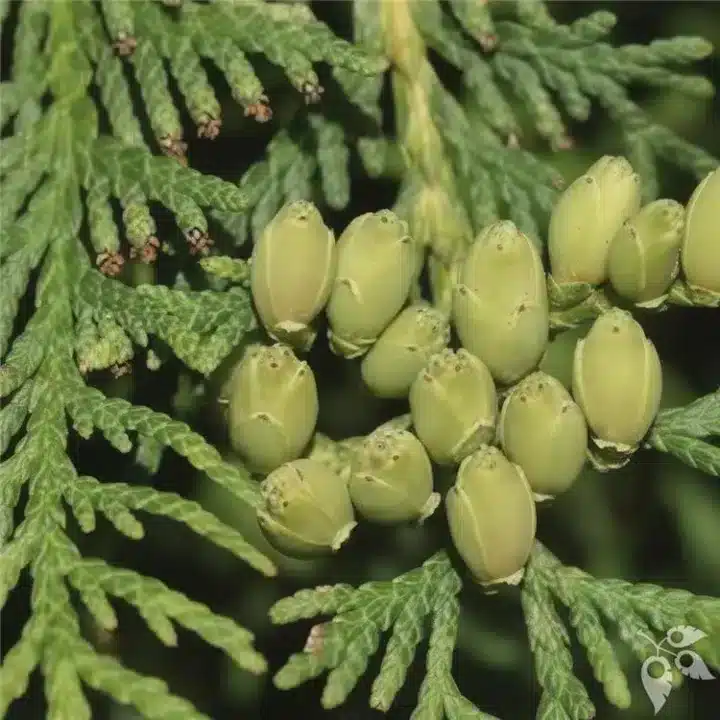
American Arborvitae (Thuja occidentali)) is a low maintenance slender woody evergreen conifer, gymnosperm, growing as a large shrub, or small tree in the Cupressaceae (cypress) family native to central Canada extending into eastern North America. American Arborvitae is now widely distributed in central and northeastern regions of the USA. It has a USDA Plant Hardiness Zone range of 2 to 7. It is a low-maintenance plant that tolerates clay soil, wet sites, black walnut, and air pollution. It grows best with full sun exposure planted into moist, neutral to alkaline, well-drained loam soil. It does not tolerate dry or windy sites. American Arborvitae may grow up to 50 ft. tall with a width up to 15 ft. It has a broad conical-pyramidal growth habit. It is a needled evergreen with a green color, a slippery feel to the touch, and a pleasant fragrance. The bark is dark brown to shades of burgundy. The attractive red-brown bark exfoliates on mature branches and trunks. American Arborvitae develops non-flowering cones from March to April. American Arborvitae is best suited for native or winter theme gardens. In the landscape, it can be used as a foundation plant, tall hedge, a privacy screen, or as a focal specimen. American Arborvitae supports small mammals and songbirds. American Arborvitae (Thuja occidentali) has been effectively developed into a bonsai.
When to Plant Arborvitae
Plant arborvitae in spring or early fall, about 3 to 5 feet apart for a privacy screen depending on the variety.
How to Plant Arborvitae
American Arborvitae should be planted in full sunlight into fertile soils with a clay loam mixture, good drainage, and a neutral or mildly alkaline (>8) pH. The soil mixture must have good drainage. Dig a hole twice the width of the root ball of the plant, and at a depth about the same height as the root ball. Propagation using stem cuttings is performed from the current year’s growth when the stems are firm but still flexible. Propagation from seeds is possible from the female cones which are upright with scales in the autumn.
Arborvitae Care
American Arborvitae requires consistent moisture. In order to maintain a consistent level of moisture in the soil at least 2 inches of shredded pine bark mulch should be applied over the region of the root zone.
Fertilizing Arborvitae
During prolonged dry spells, water the trees deeply to soak the soil down to the root zone. Feed your Thuja occidentalis trees once in early spring and again in mid-fall with a granular 6-12-12 or 10-10-10 NPK (nitrogen-phosphorous-potassium) fertilizer. Follow the directions on the label for fertilizing evergreen trees and shrubs.
Pruning Arborvitae
It is best to prune Thuja twice annually to keep it down to a manageable size and desirable shape. It may take several seasons for Thuja to recover from the hard pruning necessary to cut it back down to size. Conifers keep growing for much of the summer, until late August or even, in warmer climates, late September. Pruning to improve the shape of American Arborvitae is best performed in the spring, however, damaged limbs may be removed at any time or as necessary.
Arborvitae Pests and Diseases
Thuja occidentalis (Arborvitae) is generally disease resistant. Arborvitae may be grown as a bonsai. There are only a few pests that are of concern to a bonsai grower. One of those pests is the larvae of a tiny moth called the cedar leaf tip miner. Cedar leafminers are tiny moths native to Canada. Damage is caused by the small larvae feeding within the scale-like leaves of cedar. An infestation is usually first noticed in the spring when the tips of some branches begin to bleach and brown. Heavy infestations can cause severe thinning of the foliage. Treatment of leafminer is relatively simple. Prune away the damaged foliage to promote the recovery of the plant’s defenses. A light application of a systemic insecticide such as imidacloprid may be necessary if the infestation is extensive or recurrent. Bagworms, mealybugs, scales, leaf miners, and spider mites are fairly common pests. Most pests are effectively managed by the application of a systemic pesticide. Leaf blight in tanker may also occur. Exposed tree areas may sustain physical damage from cold winter scorch.
Is Arborvitae Toxic to Cats and Dogs?
PlantTAGG does not rate arborvitae as pet-friendly. American arborvitae is not on the ASPCA’s toxic plant list, but its foliage contains thujone and can upset a pet’s stomach if eaten in quantity. If you think a pet has eaten a toxic plant, call your veterinarian or the ASPCA Animal Poison Control Center at (888) 426-4435.
Arborvitae FAQs
How fast does arborvitae grow?
American arborvitae grows about 1 foot a year. ‘Green Giant’ grows faster, up to 3 feet a year.
Why is my arborvitae turning brown?
Common causes are drought stress, winter burn, poor drainage or normal inner needle shedding in fall.
How far apart should I plant arborvitae for privacy?
Space narrow varieties like ‘Emerald Green’ about 3 feet apart and wider types 5 to 6 feet apart.
Search thousands of plants for your zone with PlantTAGG Plant Search