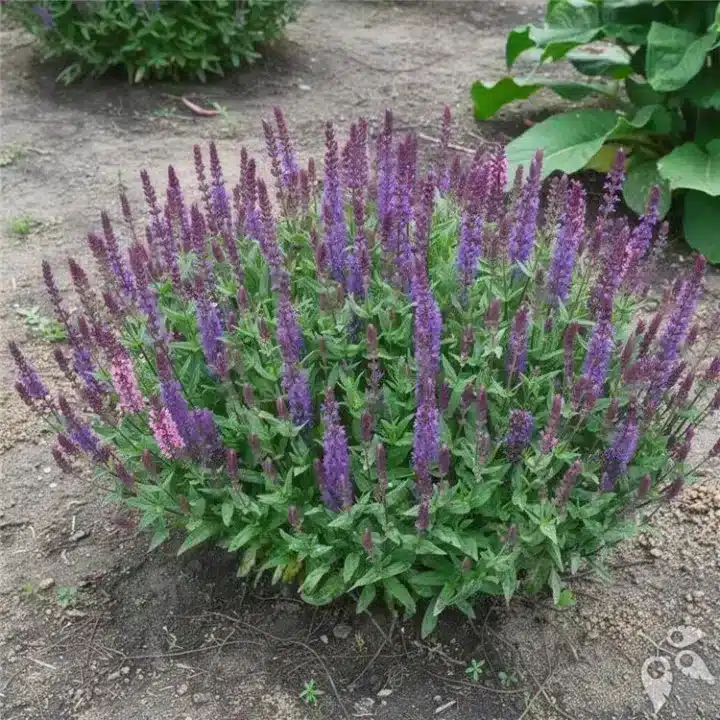
About Salvia
Salvia (Salvia spp.) grows 1 to 4 feet tall and is hardy in USDA zones 5 to 10. It grows best in full sun to part shade with medium water.
Sage (Salvia) are plants in a genus within the mint (Lamiaceae) family. Sage varieties are found all around the world. Sage varieties may have annual or perennial life cycles. Salvia are generally low-maintenance plants. While there are many species and cultivars of sage all members of the mint family including sage have square stems. Sage has a USDA Plant Hardiness Zone of 5-10. Salvia should be planted in the full sun into soil that has good drainage. Most members of this genus are small upright shrubs reaching 1-3 feet tall and wide. Each plant should be allowed 12 inches to 3 feet. The leaves are green with serrate margins and surface hairs. While there is variation in the leaf shape and texture among varieties sage typically have opposite, decussate leaves. Small tube-shaped and two-lipped flowers with pink, purple, lavender, red/burgundy, or white colors are present on many sage varieties. The stems are erect with a square cross-section. The name Salvia is derived from the Latin term “salvo” which means “I save” in reference to the plant’s medicinal properties. The leaves of sage can be used fresh or dried for seasonings and tea. The flowers are edible. Sage is useful in butterfly gardens, edible gardens, and pollinator gardens. Sage attracts and supports and butterflies, hummingbirds, and pollinators.
When to Plant Salvia
Plant perennial salvia in spring after the last frost or in early fall. Annual salvias go in after frost danger has passed.
How to Plant Salvia
The various varieties of Sage (Salvia) should be planted in full sun or partial sun with later afternoon protection in warmer climates. Sage (Salvia) requires excellent drainage to avoid root rot. Sand expanded shale and additional organic matter should be added to the sage bed. Recommended propagation methods include division, seed, and stem cutting.
Salvia Care
Sage should be watered at the base of the plant to avoid leaf diseases. The soil should be moist but well-drained. A 2-inch layer of mulch is helpful during hot summers. Larger sage plants may require ring support. Salvia plant should be covered by organic mulch after cutting the bushes back in the later fall or early winter after the first hard freeze.
Fertilizing Salvia
Organic fertilizer or a 2-inch layer of compost is suitable for most sage. A slow released balanced fertilizer such as 10-10-10 may be added in the spring to promote growth. Fertilization should be discontinued in midsummer.
Pruning Salvia
The spent flowers may be removed at any time to promote new flowers. The salvia plants should be cut to 4 or 5 inches after the first hard freeze.
Salvia Pests and Diseases
Whitefly, aphids, mealybug, and spider mites are insect problems. They can generally be managed by a neem oil spray. The spraying should occur in the early morning when bees, butterflies, and other pollinators are not present. Rust, powdery mildew, stem rot, and fungal leaf spot are disease problems. Many leaf and stem diseases occur secondary to poor watering practices. Water should be directed at the root zone only. The soil in the bed must have good drainage.
Is Salvia Toxic to Cats and Dogs?
The ASPCA lists common garden salvias, such as scarlet sage, as non-toxic to dogs, cats and horses. If you think a pet has eaten a toxic plant, call your veterinarian or the ASPCA Animal Poison Control Center at (888) 426-4435.
Salvia FAQs
Should I cut back salvia after it blooms?
Yes. Shearing spent flower spikes encourages a second, and sometimes third, round of blooms on perennial salvias.
Do salvias attract hummingbirds?
Yes. Salvias are among the best plants for hummingbirds, bees and butterflies, especially red and purple varieties.
Is salvia drought tolerant?
Once established, most perennial salvias handle dry spells well. Water new plants regularly for their first season.
Search thousands of plants for your zone with PlantTAGG Plant Search