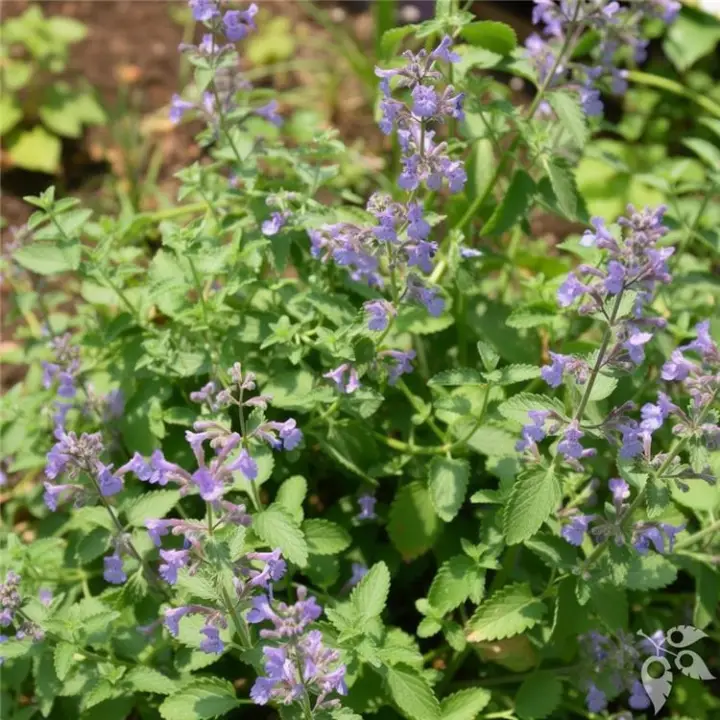
Common Name: Walker’s Low Catmint, Catmint, Faassen’s Catmint
Botanical Name: Nepeta x faassenii ‘Walker’s Low’
Category: Herb
Lifecycle: Perennial
USDA Hardiness Zones: 4A – 8B
Sun Requirement: Full Sun (6+ hours), Part Shade (2-4 hours)
Water Requirement: Low
Soil: Adaptable
pH: Neutral (6.6-7.3)
Height: 1 to 2 ft
Spread: 2 to 3 ft
Spacing: 2 to 3 ft
Growth Rate: Rapid
Maintenance: Low
Bloom Time: Spring, Summer & Fall
Bloom Color(s): Lavender, Blue, Purple
Leaf Type: Simple
Leaf Shape: Cordate
Leaf Arrangement: Opposite
Leaf Retention: Semi-Evergreen
Miscellaneous: Tolerates poor soil
About Walker’s Low Catmint
For an easy-to-grow perennial that is drought and heat tolerant, pest and disease resistant, and blanketed with showy lavender blooms from spring to fall, ‘Walker’s Low’ catmint is a must-have choice. If you love the classic combination of lavender and roses but find lavender too difficult to grow in your area, ‘Walker’s Low’ catmint is a wonderful option. This herbaceous member of the Lamiaceae (mint) family originated in West Asia (Turkey and Iran), a cross between Nepeta racemose and Nepeta nepetella.
‘Walker’s Low’ catmint is cold hardy within the USDA Zones 4a-8b and should be planted in full sun or partial shade. It is adaptable to a wide variety of moist soil conditions, including clay, loam, sand and even shallow rocky textures providing good drainage with a neutral pH of (6.0-8.0). If planted in the south, it will benefit from some afternoon shade, and it may be bothered by high humidity.
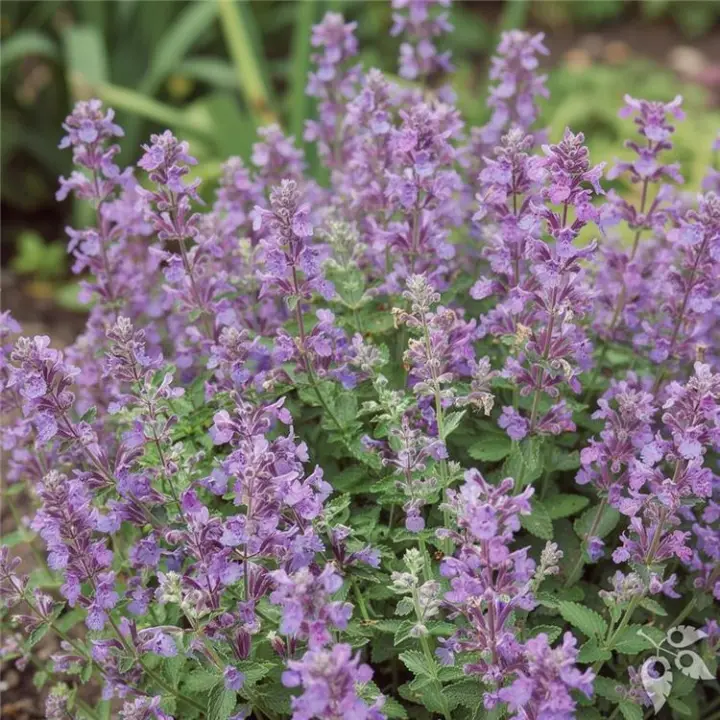
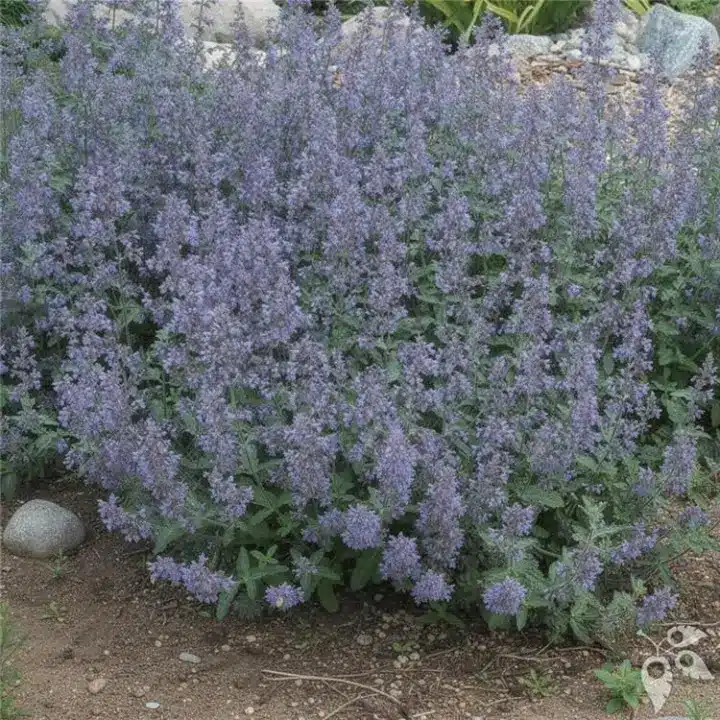
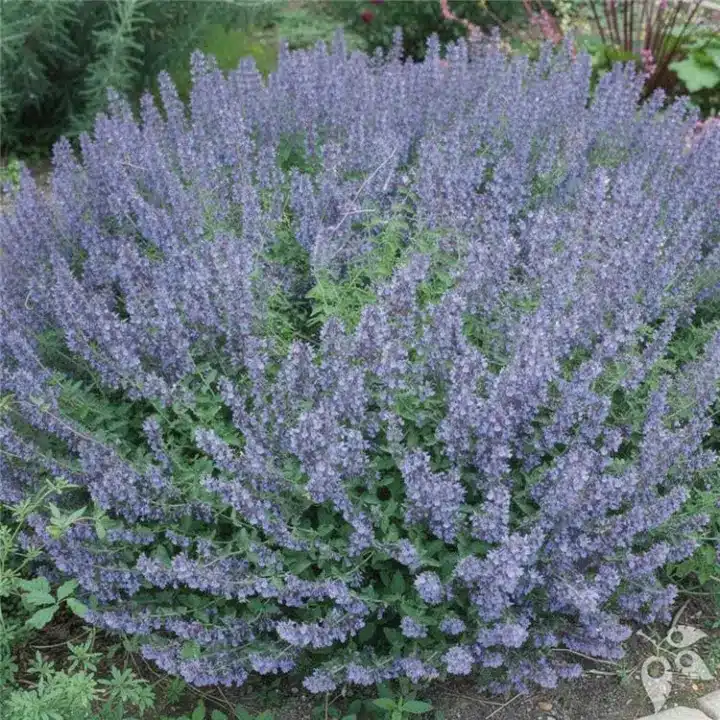
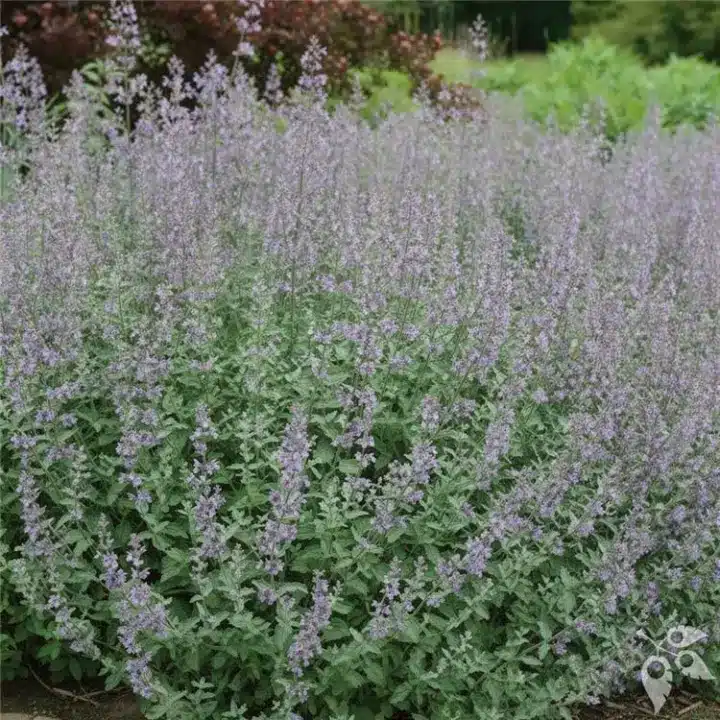
In ideal conditions, ‘Walker’s Low’ catmint forms neat mounds as high as 2 feet with a spread of 18 to 36 inches. Its fragrant green leaves measure 1-3 inches in length and width. The leaves are simple, cordate – ovate in shape, arranged opposite with crenate margins. The leaves are fragrant when crushed. The stems are initially green, later becoming gray with a square cross-section. Showy blue or purple/lavender flowers are ½ inch long, trumpet-shaped, and arranged in loose clusters. Each flower has four stamens surrounded by lavender-blue petals. The flowers will rebloom in midsummer if cut back.
‘Walker’s Low’ catmint was first cultivated by Faassen Nurseries in the Netherlands and named for a garden called Walker’s Low. It is suitable for naturalized areas, on sloped surfaces within gardens for the blind, and drought-tolerant gardens. It can be placed in borders or collected into small groups of plants. ‘Walker’s Low’ catmint is attractive to bees, butterflies, and hummingbirds. It offers resistance to deer, drought, dry soil, and urban pollution. Walker’s Low catmint was the 2007 Perennial Plant of the Year.
Propagation & Planting
‘Walker’s Low’ catmint should be planted in full sun or partial shade into soil that provides good drainage containing clay, loam, sand, or even shallow rocky texture with a neutral pH. The soil should not be excessively enriched, as flower production is reported to be better in more basic soil mixtures. Each plant should be allowed 3 feet or more of space. Some protection against late afternoon southwestern exposures should be considered when planting in Zone 8.
Because ‘Walker’s Low’ catmint is a hybrid, the flowers are sterile with no seed production. Division of an established bed is the primary method of propagation. This plant can be divided in the spring and will not take over a garden bed, unlike most plants in the mint family.
Basic Care Instructions:
Although ‘Walker’s Low’ catmint is drought tolerant, newly planted specimens should be provided consistent moisture of at least one inch per week until they are well established. The bed surrounding each plant should be mulched using shredded pine bark or pine needles. ‘Walker’s Low’ catmint does not require external bracing or support.
Fertilizing Instructions:
Newly planted beds of ‘Walker’s Low’ catmint may be promoted by the application of an organic mulch supplemented by an organic fertilizer during the first spring. Alternatively, slowly-released granular balanced fertilizer (10-10-10) may be applied several weeks after planting. Fully established plants need no supplemental fertilization.
Pruning Instructions:
Diseased or damaged leaves or stems may be removed at any time. Removal of spent flowers will promote reblooming throughout the summer. Shearing the bed may promote late summer blooming.
Pests & Disease:
‘Walker’s Low’ catmint is pest and disease resistant. Leaf spot occasionally occurs. This fungal disease is not considered serious enough to warrant chemical control practices. Leaf diseases are best avoided by watering the bed using drip line irrigation or watering early in the morning to allow the plants to dry quickly in the sunlight.
Attracts
Resistances
Tolerances
Walker’s Low Catmint FAQs
How much sun and water does Walker’s Low Catmint need?
Walker’s Low Catmint grows in full sun to part shade and needs little water once established. It is hardy in USDA zones 4A to 8B. In the South it benefits from some afternoon shade.
Should I cut back Walker’s Low Catmint?
Yes. Cut it back after the first flush of flowers and it will rebloom in midsummer. Shearing the bed can also promote late-summer blooms, and diseased or damaged stems can be removed at any time.
Does Walker’s Low Catmint need fertilizer?
Only when newly planted: use organic mulch with an organic fertilizer the first spring, or a slow-release 10-10-10 fertilizer a few weeks after planting. Established plants need no fertilizer.