Get care reminders for Sunshine Ligustrum tailored to your yard with the free PlantTAGG appDownload PlantTAGG on the App StoreGet PlantTAGG on Google Play

Sunshine Ligustrum: Care, Size & Growing Zones

Sunshine Ligustrum (Ligustrum sinense 'Sunshine')
Sunshine Ligustrum (Ligustrum sinense 'Sunshine') Sunshine Ligustrum (Ligustrum sinense 'Sunshine') Sunshine Ligustrum (Ligustrum sinense 'Sunshine') Sunshine Ligustrum (Ligustrum sinense 'Sunshine') Sunshine Ligustrum (Ligustrum sinense 'Sunshine') Sunshine Ligustrum (Ligustrum sinense 'Sunshine')

Full Sun – 6+ hours of sunMedium WaterDeer Resistant
Common Name: Sunshine Ligustrum
Botanical Name: Ligustrum sinense ‘Sunshine’
Brand: Southern Living®
Patent: PP20379
Category: Shrub
Lifecycle: Perennial
Hardiness Zones: 6A – 10B
Sun: Full Sun (6+ hours), Part Shade (2-4 hours)
Water: Medium
Soil: Adaptable
pH: Adaptable
Height: 3 to 6 ft
Spread: 3 to 4 ft
Spacing: 3 to 4 ft
Growth Rate: Moderate
Maintenance: Low
Flowers: No Flowers (sterile)
Leaf Type: Simple
Leaf Shape: Elliptic
Leaf Arrangement: Opposite
Leaf Retention: Evergreen
Fruit: None
Toxicity: Poisonous to humans
Miscellaneous: Tolerates Poor Soil

About Sunshine Ligustrum

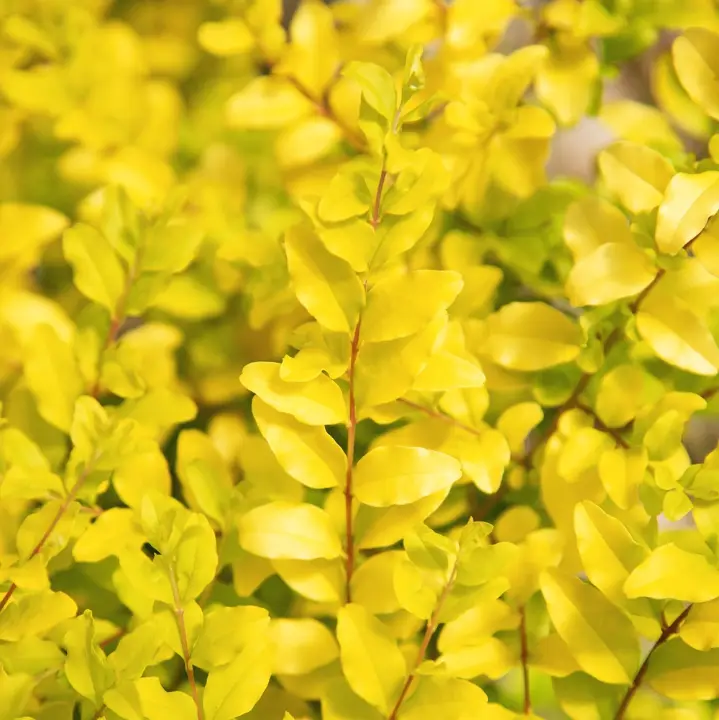
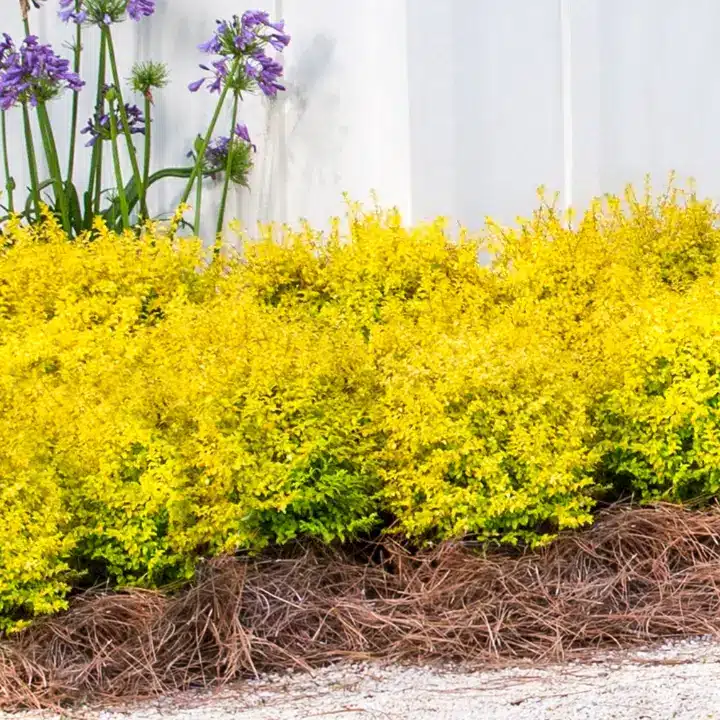
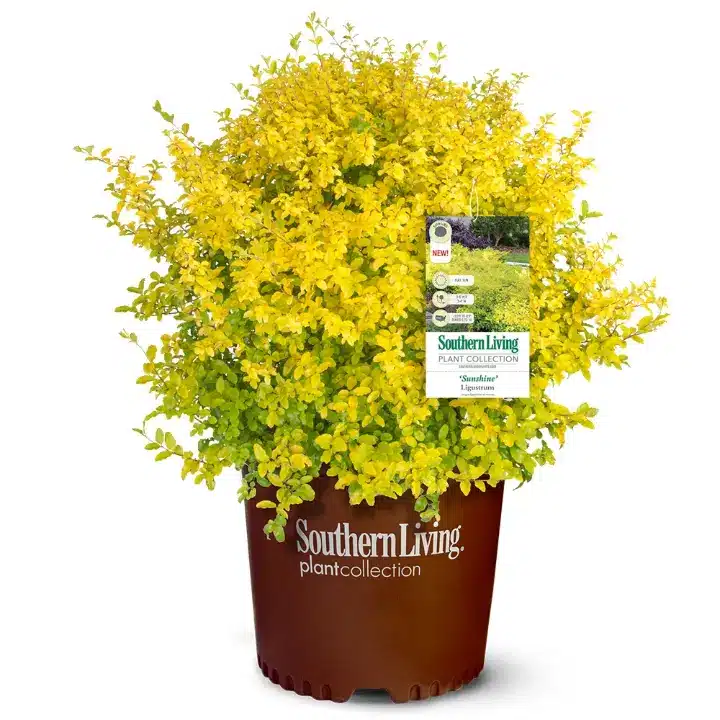
Sunshine Ligustrum brings golden-yellow to lime-green foliage to the garden without producing flowers; this sterile shrub is grown for its leaves rather than a seasonal bloom display. Its dense, upright growth and rounded outline suit hedges, foundation plantings, containers, and mass plantings. Selected in July 2002 at a nursery in Zebulon, North Carolina, it originated as a naturally occurring branch mutation. Its smooth, oval to oblong leaves grow in opposite pairs along freely branching stems, creating a closely knit canopy. The foliage provides color through the seasons, although the shrub can be semi-evergreen rather than fully evergreen in colder conditions. Deer resistance, salt tolerance, and drought tolerance once established add to its usefulness in landscapes. As a specimen or a repeated hedge, Sunshine Ligustrum supplies a bright contrast to dark green or purple foliage, while its yellow leaves make a colorful backdrop for flowers. For more information on Sunshine Ligustrum, visit the Southern Living Plants website.

Propagation & Planting

Plant nursery-grown Sunshine Ligustrum throughout the growing season, with spring and fall the preferred planting times. Choose full sun to partial shade, favoring at least six hours of direct sunlight; where summers are very hot, a little afternoon shade can help prevent leaf scorch. In cold-winter climates, choose a site sheltered from harsh winter winds. Use well-drained soil, avoiding places where water collects. Water the root ball thoroughly before planting. In the ground, dig a hole twice as wide as the nursery pot and shallow enough that the top of the root ball will sit 1 to 2 inches above the surrounding soil. Remove the pot, gently loosen tangled outer roots, and cut any roots circling tightly around the root ball. Allow enough space between plants and nearby structures for their natural mature spread, or space plants 3 to 4 feet apart for a hedge. Backfill with the excavated soil, then water deeply to settle it around the roots, adding soil where settling leaves gaps without burying the top of the root ball. Apply a 1- to 2-inch layer of mulch around the planting area, keeping it away from the stems. For container planting, use a pot with drainage holes and a lightweight, well-drained potting mix rather than garden soil. Keep the original nursery soil line exposed, water thoroughly after planting, and position the container in the same suitable light conditions. This plant has patented genetics so propagation is prohibited.

Grow a healthier Sunshine Ligustrum

The free PlantTAGG app gives you care reminders matched to your location and weather, plant ID and photo diagnosis, and answers to your gardening questions from Ask Emily.

Download PlantTAGG on the App StoreGet PlantTAGG on Google Play
Close the Mobile Menu