Get care reminders for Black Eyed Susan tailored to your yard with the free PlantTAGG appDownload PlantTAGG on the App StoreGet PlantTAGG on Google Play

Black Eyed Susan: Care, Size & Growing Zones

Black Eyed Susan (Rudbeckia hirta)
Black Eyed Susan (Rudbeckia hirta) Black Eyed Susan (Rudbeckia hirta) Black Eyed Susan (Rudbeckia hirta) Black Eyed Susan (Rudbeckia hirta) Black Eyed Susan (Rudbeckia hirta) Black Eyed Susan (Rudbeckia hirta) Black Eyed Susan (Rudbeckia hirta) Black Eyed Susan (Rudbeckia hirta) Black Eyed Susan (Rudbeckia hirta) Black Eyed Susan (Rudbeckia hirta)

Full Sun – 6+ hours of sunLow WaterAttracts PollinatorsPet FriendlyNorth American Native
Common Name: Black Eyed Susan, Brown Eyed Susan, Denver Daisy, Rudbeckia, Gloriosa Daisy
Botanical Name: Rudbeckia hirta
Category: Perennial
Lifecycle: Perennial
USDA Symbol: RUHI2
Hardiness Zones: 4A – 9B
Sun: Full Sun (6+ hours), Part Sun (4-6 hours)
Water: Low
Soil: Sandy Loam
pH: Adaptable
Height: 2 to 3 ft
Spread: 1 to 2 ft
Spacing: 1 to 2 ft
Growth Rate: Rapid
Maintenance: Low
Bloom Time: Spring, Summer, Fall
Bloom Color(s): Black, Yellow
Leaf Type: Simple
Leaf Shape: Oblong
Leaf Arrangement: Alternate
Leaf Retention: Deciduous
Fruit: Edible to Birds/Wildlife
Fruit Time: Summer
Miscellaneous: Tolerates poor soil, Wildflower, Native Plant
Propagations List: Seed, Division

About Black Eyed Susan

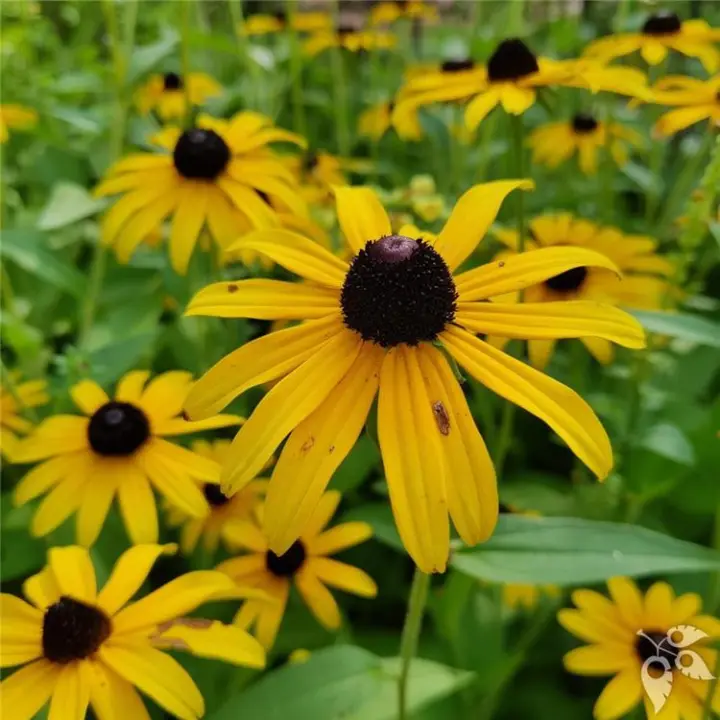
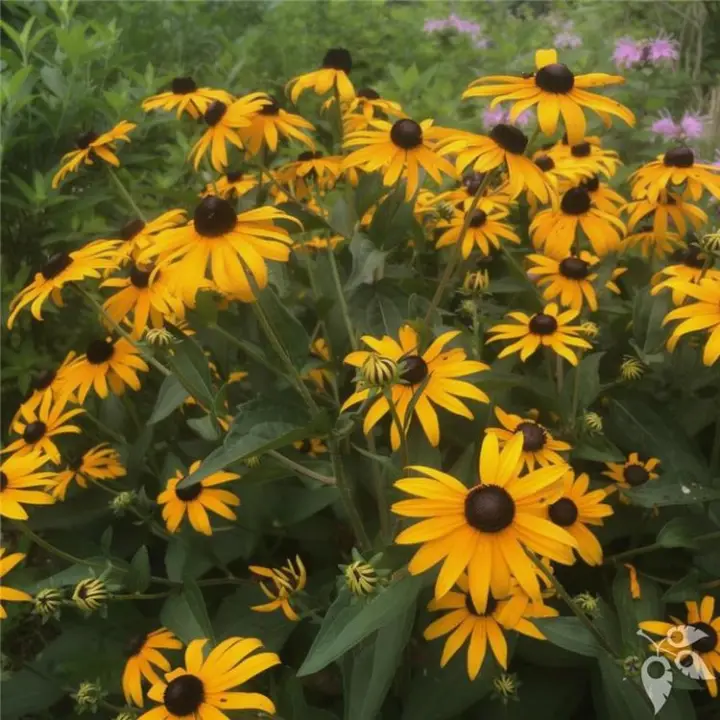
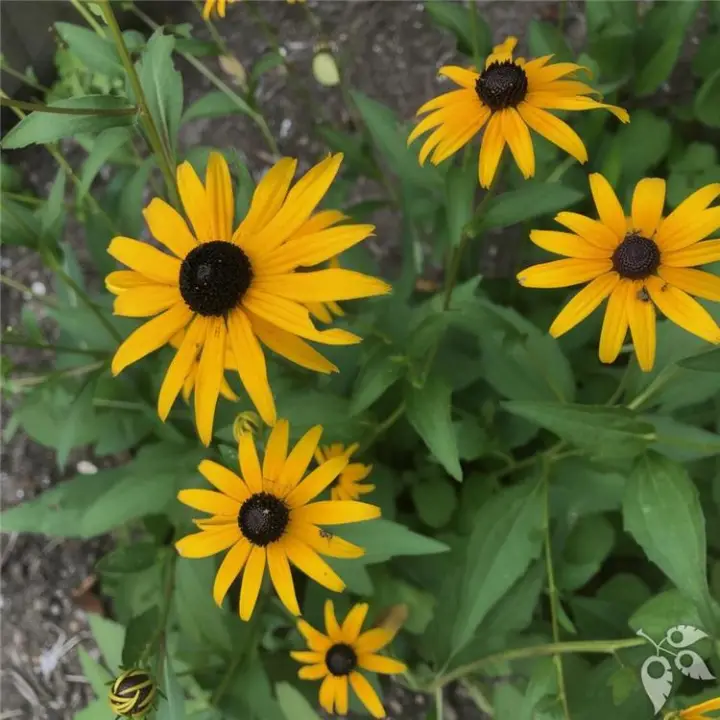
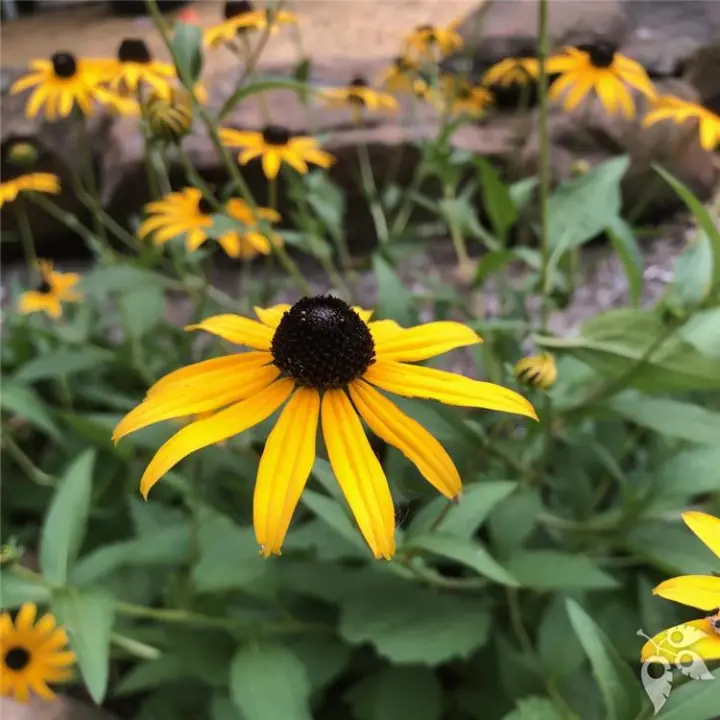
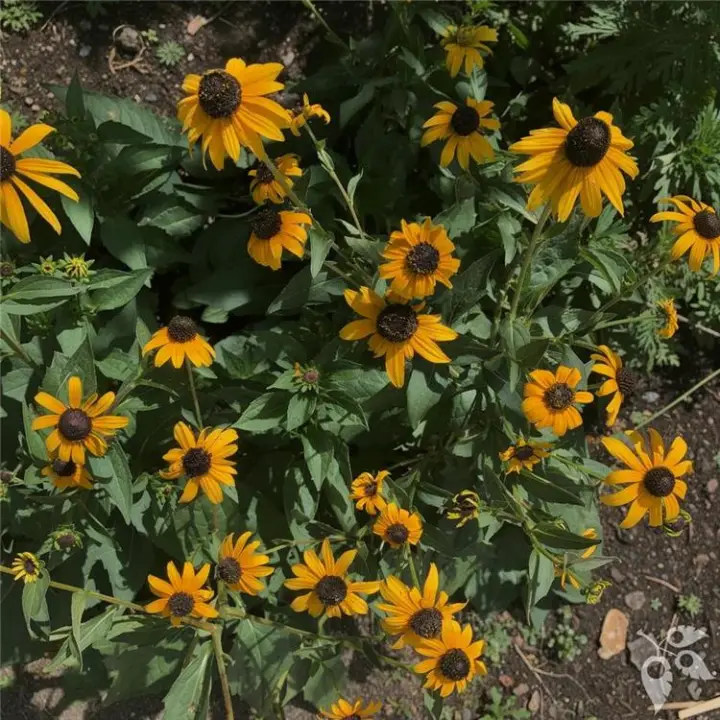
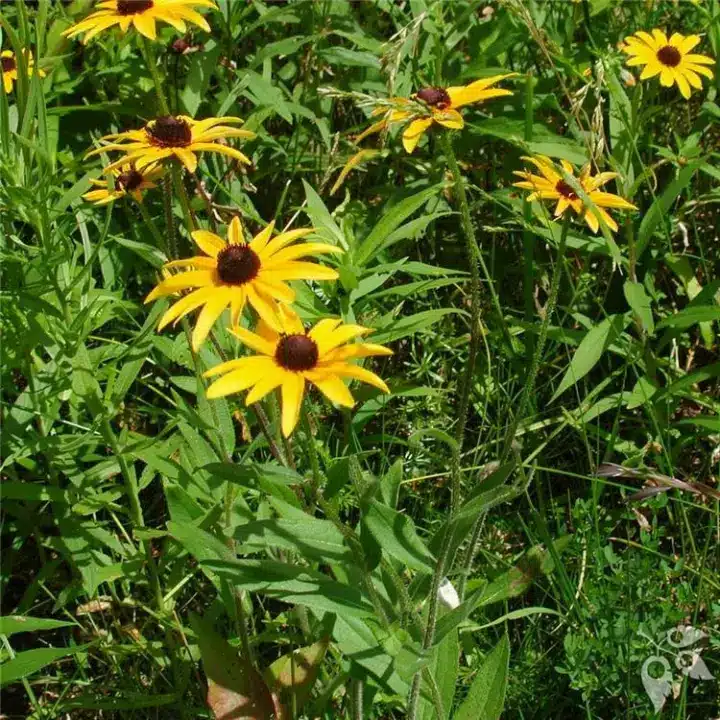
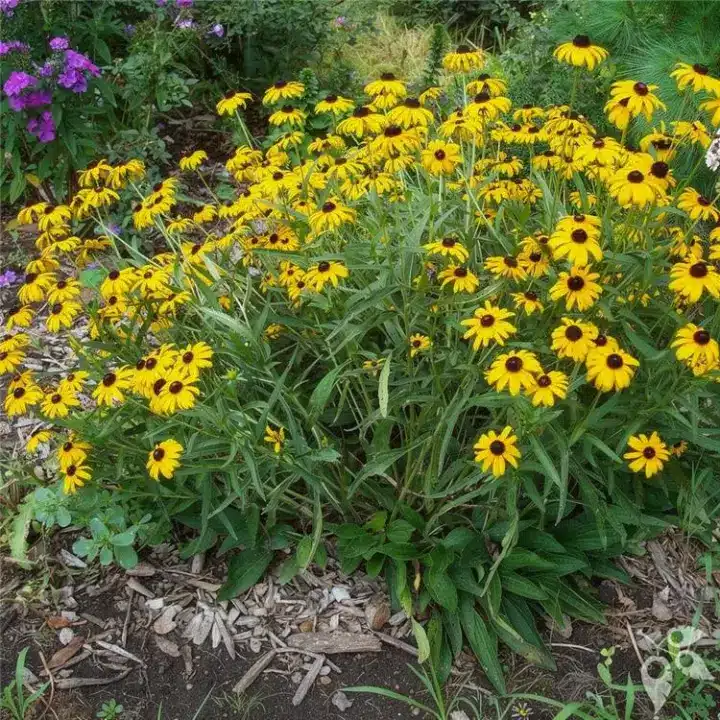
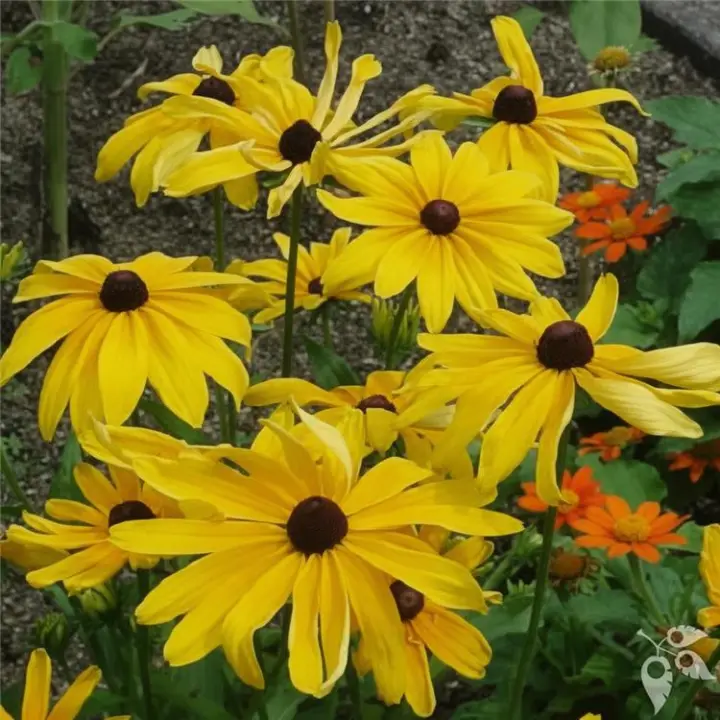
Widely appreciated for its spectacular, bright yellow, daisy-like blooms with dark centers, the Black Eyed Susan plant adds a charming dash of sunshine to cottage gardens, cutting gardens, rock gardens, patio containers, or sunny perennial borders. Reaching a height of 2-3 feet tall and a spread of 1-2 feet wide, this plant is perennial to USDA zones 4 through 9. The Black Eyed Susan plant is native to North America.

Propagation & Planting

The Black Eyed Susan is considered to be a short-lived perennial, but the plant self-seeds prolifically, and will return year after year if planted in moist, well-draining soil in an area that receives full sun. This plant is best propagated by division, and should be divided every few years to provide adequate air circulation. Dried seeds may be collected from the seed heads as they begin to open, and should be stored in an air-tight container in the refrigerator for planting the next season. Seed should be loosely dispersed and shallowly covered by moist soil when planted.

Plant Care

The Black Eyed Susan plant responds well when organic matter is worked into the soil at the time of planting. This plant requires a sunny garden location with at least 6 hours of direct sun and well-drained soil. The plant will survive partial shade, but may require staking, as it will tend to grow taller in an attempt to reach more light. The Black Eyed Susan will survive a drought once established, but will not survive consistently wet, soggy conditions. The upright clumps should be divided every few years to provide the plant with good air circulation, therefore helping to prevent downy mildew or leaf spots. Regular removal of spent flowers will help control the height of the plant and maintain an attractive appearance so that staking is not necessary.

Fertilize

The Black Eyed Susan plant does not require fertilizer, but will respond well to the addition of rich, organic matter or compost if worked into the soil around the plant base.

Prune

The regular removal of spent flowers will encourage more blooms. The black flower centers eventually become seed heads in the fall and may be left on the plant or ground, if desired, to provide food for the birds in winter. Unsightly stems and dried leaves should be removed in the spring to give the plant a more attractive appearance as it begins to re-grow for the next season.

Pests & Disease

In ideal conditions, the Black Eyed Susan plant is relatively pest-and-disease-free. Excessive moisture and over-crowding will promote powdery mildew, and should be avoided. Verticillium Wilt, for which there is no cure, is a fungal disease which can be spread by overly wet conditions or infected tools. The plant may also suffer from Phytoplasma or Bacterial leaf spot, in which case, the affected areas must be removed. The Black Eyed Susan will occasionally be eaten by slugs or snails, which can be controlled with a careful application of Diatomaceous Earth according to the product label directions.

Grow a healthier Black Eyed Susan

The free PlantTAGG app gives you care reminders matched to your location and weather, plant ID and photo diagnosis, and answers to your gardening questions from Ask Emily.

Download PlantTAGG on the App StoreGet PlantTAGG on Google Play
Close the Mobile Menu